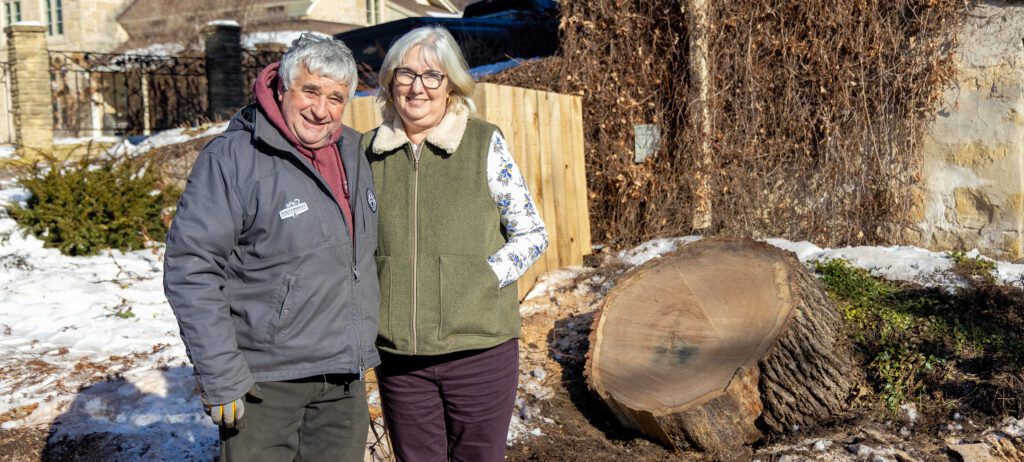
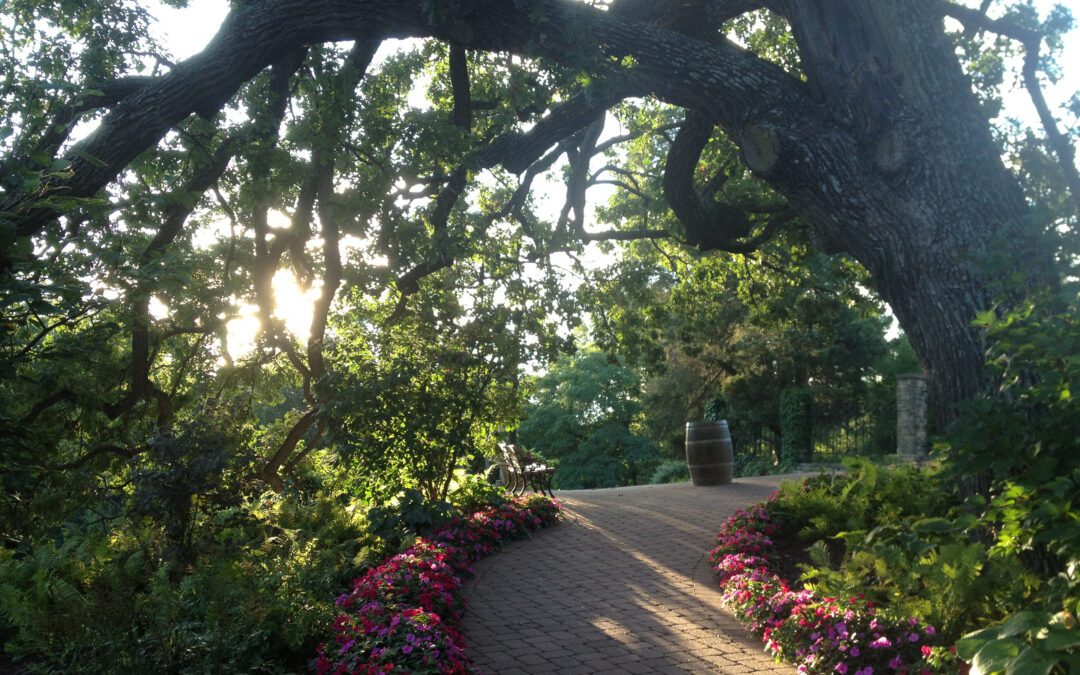
Earlier this year we said goodbye to one of Wollersheim’s oldest neighbors — the Mighty Oak that stood beside the winery for nearly two centuries. While it was difficult to see the tree come down, we determined it was the right time to preserve the sound wood and to do so safely, allowing the oak to continue its story in a new way.
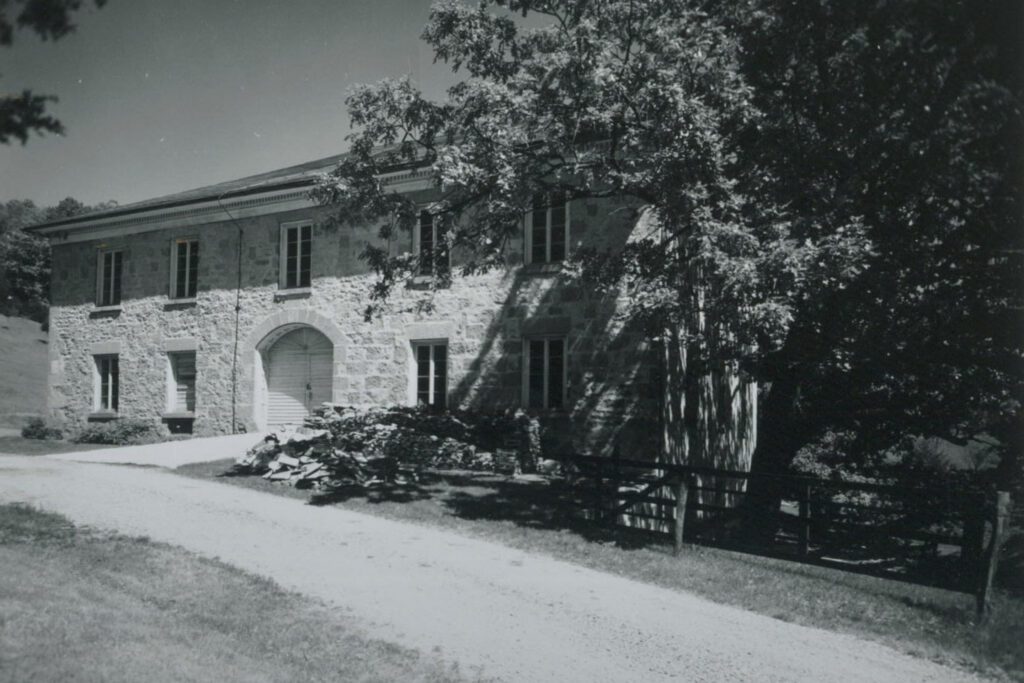
The burr oak first took root on this property around 1829 — long before the first vineyards were planted here in 1847, and decades before the winery itself was built in 1858. For generations it stood just outside the cellar door, quietly growing alongside the winery.
In the early days of Wollersheim, the oak was nourished by leftover grape skins from wine and brandy production. Those skins were spread on the ground nearby, returning nutrients to the soil and helping feed the tree that would become a familiar part of the landscape.
After nearly two centuries of growth, the oak tipped over in 2017, the result of its great age and an unusually wet spring that weakened the soil around its roots. Rather than removing it immediately, we supported the fallen tree so it could continue living in its new position — which it did for several years.
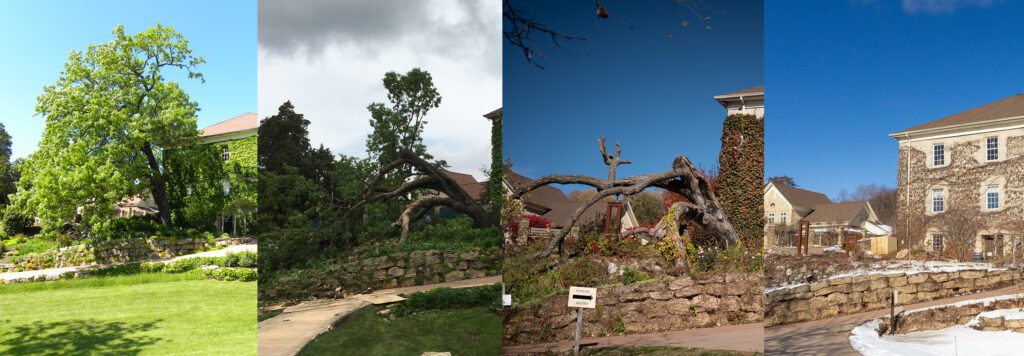
Over time, however, it became clear that the best way to honor the oak’s legacy was to preserve the wood while it was still healthy.
This week we took the next step in that process.
We visited The Mill, a new sawmill outside Evansville run by Josh Geidel. Josh grew up in Cedarburg and spent many days of his youth running around Cedar Creek Winery, so it felt especially fitting that he’s now helping shape the next life of this historic tree. His mill is also one of the few capable of handling a trunk of this size.
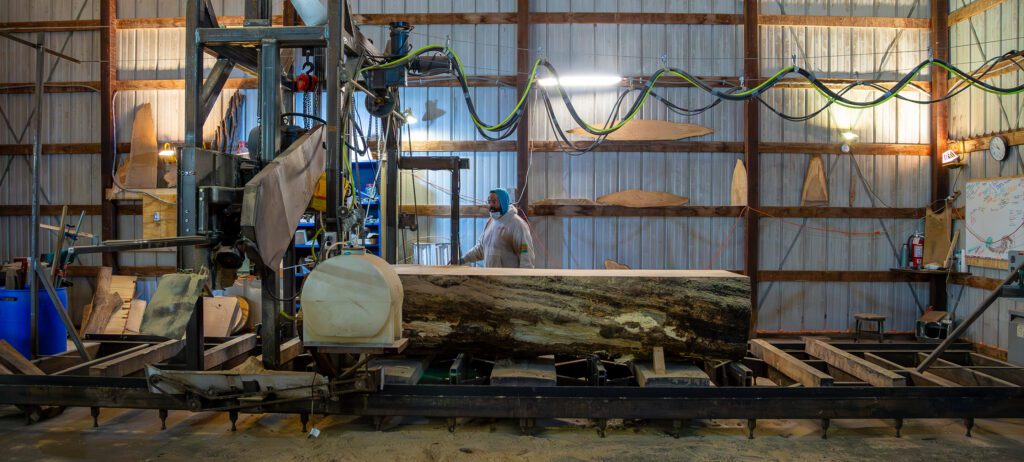
The first step in milling was removing the bark. Bark acts as the tree’s protective layer, collecting minerals and debris from the ground and air. While that’s good for the tree, those materials can damage saw blades during milling, so stripping the bark is an important part of the process.
Once the trunk was prepared, Josh carefully positioned it on the mill bed to plan the cuts in a way that preserved the tree’s natural character — especially the dramatic intersection where the largest branch once grew. Then the milling began.
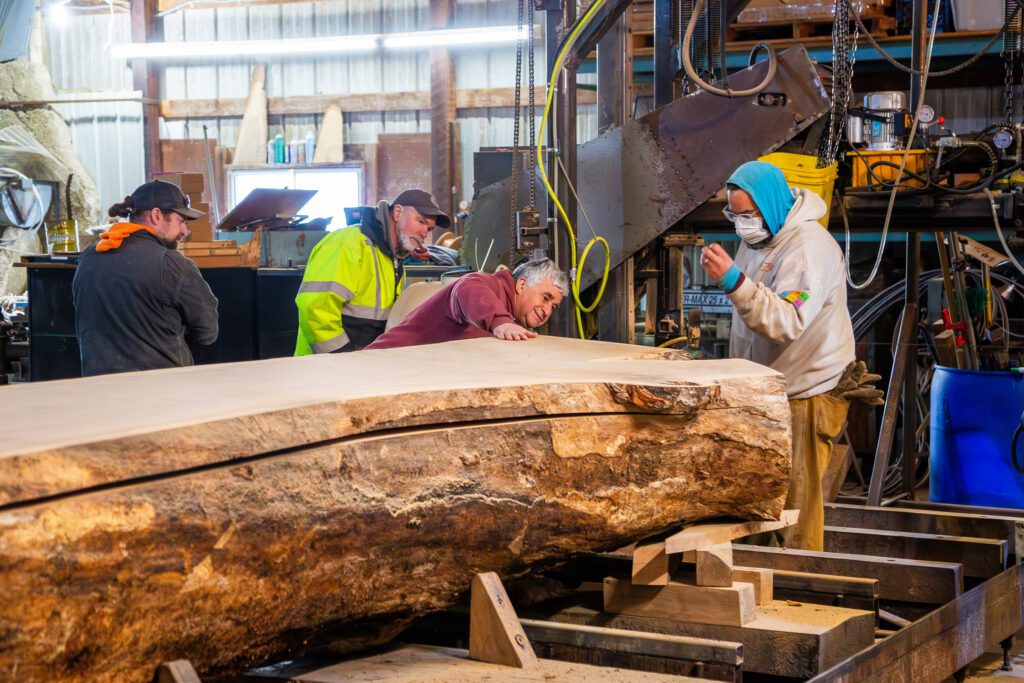
With each pass of the saw, a new slab emerged, revealing layers of the oak’s hidden history. We paused after each cut to study the rings, the colors, and the patterns that had been concealed inside the tree for centuries.
One surprise appeared a few layers down: a bullet embedded in the wood. Josh explained that finding bullets inside old trees isn’t unusual — especially for one that has stood on a landscape for nearly 200 years.
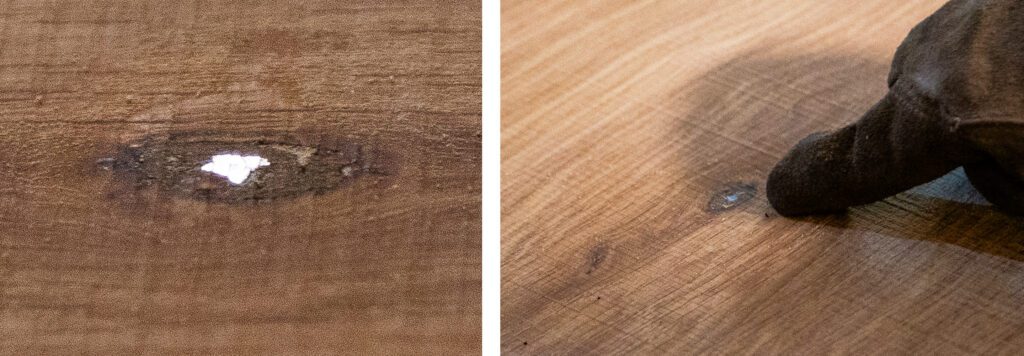
But the most exciting discovery was the wood grain itself.
As we reached the section that will eventually become tables for the Wollersheim Bistro, the grain patterns and contrast were extraordinary — bold lines and swirling shapes that Josh said were among the most beautiful oak grain he’s seen.
Even after two centuries of growth, the Mighty Oak still had surprises left to share.
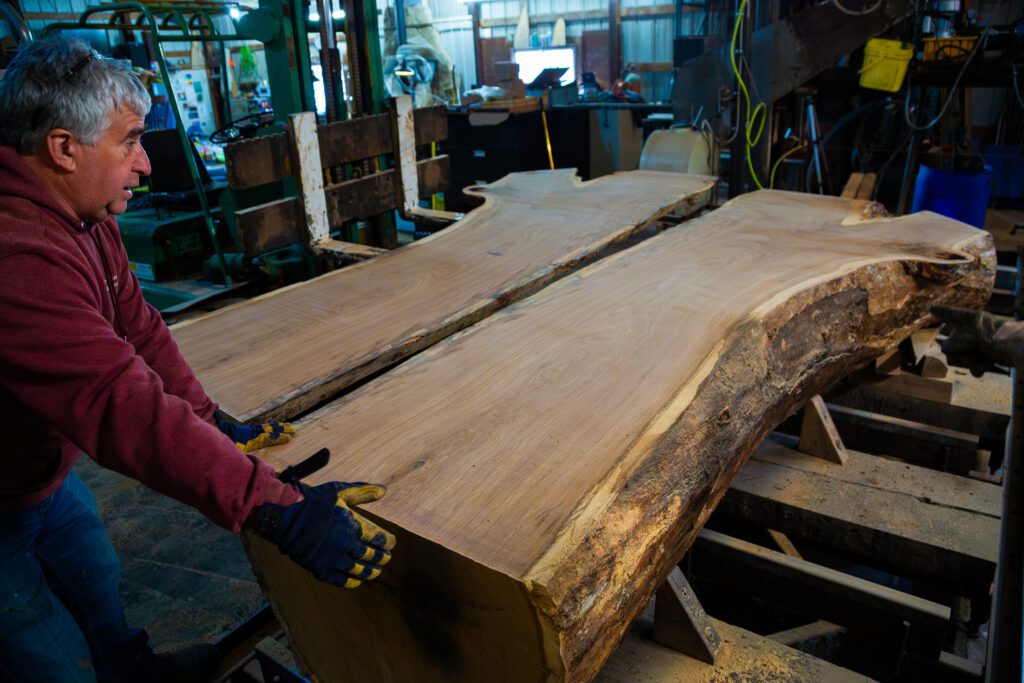
The next step will take time. The slabs now need to air dry before going through a kiln process that stabilizes and preserves the wood. After that they will be carefully finished to highlight the grain and protect the surfaces so they can be used as tables.
If all goes according to plan, these pieces of the Mighty Oak will eventually find their home in the Wollersheim Bistro, though installation will likely not happen until Fall or Winter of 2026. There is still a great deal of beautiful wood remaining from the tree, and we are exploring other ways to use it throughout the property.
By preserving and reusing its wood, we hope to honor the oak’s legacy — allowing the Mighty Oak to continue its story here, where it has belonged for nearly 200 years. Soon, visitors will be able to sit at tables crafted from the same tree that has watched over Wollersheim for generations!